DDT Exposure

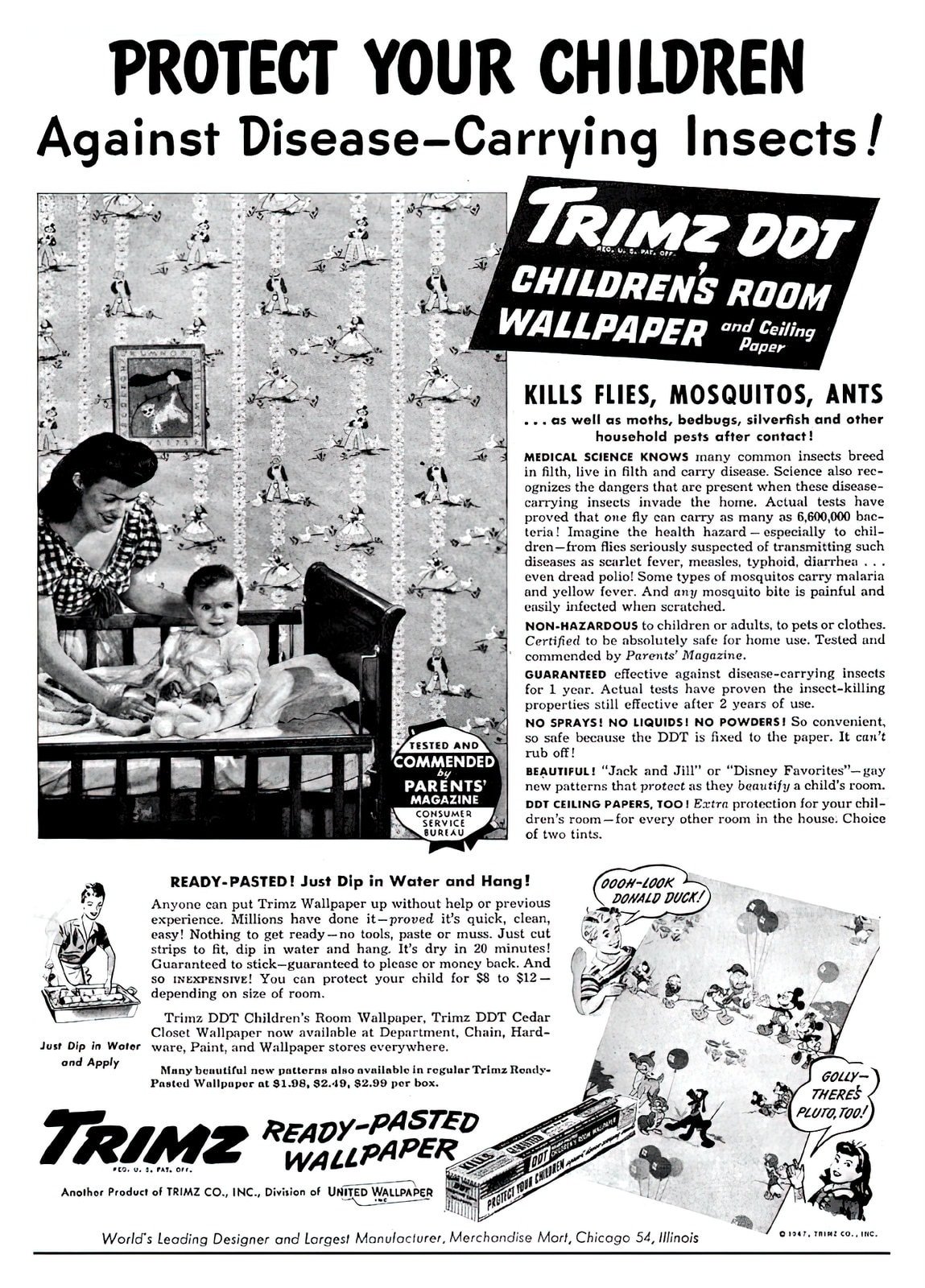
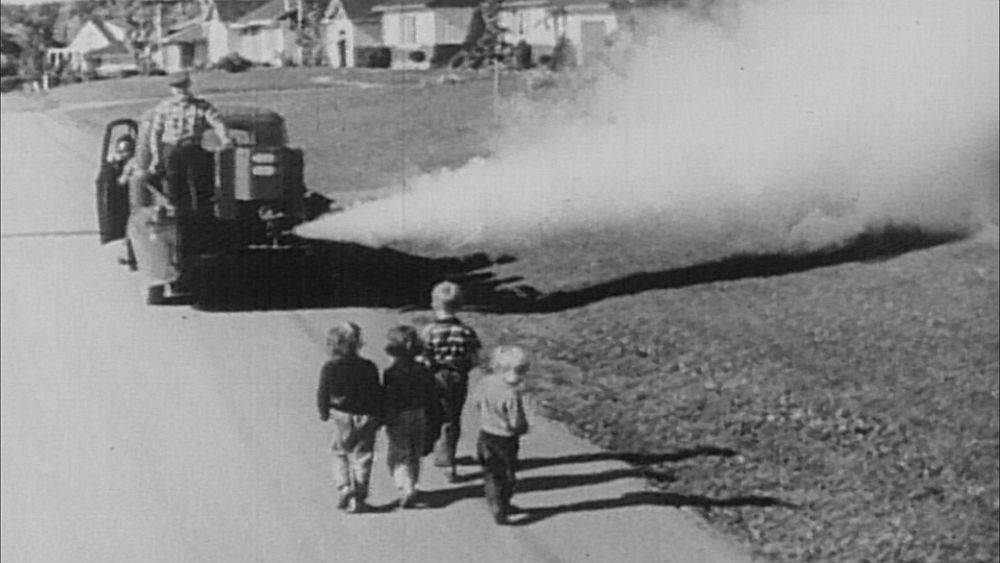
1972, when DDT was banned, my Dad told me that he and his five brothers would come in from the fields of my Grand Dad's truck farm covered white with DDT dust. DDT was VERY popular in the 30s and 40's. Touted as safe for nearly every application. My Dad was diagnosed with Cancer a year later and died an early death (age 53) in 1974. Anyone else have experience with DDT ?

-

Speaking of trichloroethylene. The elementary school I spent 9 years of my life at (K-8th Grade) was located right next door to a commercial dry cleaning factory. They had 3 open lagoons behind the factory next to our playground where they disposed of all of their spent chemicals.
Later environmental testing (after my time at the school) found the drinking water badly contaminated and not fit for even hand washing. The City closed that school and the place next door became a hazardous waste brown site.
I later used trichlor while in the USAF for cleaning aircraft wearing only rain gear. Then worked in a chemical plant for 7 years using it for cleaning out the huge kettle vats and loading the wash in 55 gallon drums. A drum of that stuff sure is HEAVY! I will never forget how it smells either. About all I can say is every BIRTHDAY is a gift!
3 -
I spent one summer (1972) working for my friends, father's fiberglass boat yard. He built/repaired canoe's to 40 ft tri-marans.
MEK, trichloroethylene, and acetone used constantly to remove resin from hands, tools and clothing.
No gloves or respirators. We were lucky it was mostly outside work.
0 -
chme, speaking of Eglin AFB...
Sometime in the later 70s I was pulling my annual two Reserve weeks as the Public Affairs Chief at Eglin when the 60 Minutes crew came to do a piece on Dioxin and Agent Orange. They wanted to film where drums of the stuff had been dumped.
I took them to the site, which by then was simply a sandy depression in the ground. The cameraman got set up and then complained that the sight was too plain. He asked me where all that dioxin stuff was, and I pointed down. "We're standing in it" I said.
He nearly levitated.
Where I was in Vietnam (right near the Cambodian border) they had extensively sprayed not just Agent Orange, but Agents Blue and White as well. Didn't know there were such things? Yup. Much smaller amounts, but to this day, I doubt anybody knows what was in those other agents. Or will admit to it.
3 -

All the chlorinated hydrocarbons were banned from further manufacture and use in the U.S. on April 1, 1972. Non of these compounds, when used at labeled rates, has been shown to increase the incidence of cancers. In fact the more compelling evidence is just the opposite. The reason for the 1972 ban was the increasing evidence that chlorinated hydrocarbons "bio-accumulated" which means as the target insects were consumed by predators, and these predators were, in-turn, consumed by larger predators, the relative amounts of chlorinated hydrocarbons increased as a percentage of predator body weight and wasn't being metabolized quickly. There was also evidence that raptors, as apex predators, were experiencing population decline due to a thinning of eggshells and consequent embryo death caused by broken eggshells. This is now an accepted proven effect of chlorinated hydrocarbons.
Chlorinated hydrocarbons such as DDT, heptachlor, chlordane, etc. are also persistent in the environment and by modern pesticide registration standards take far too long to degrade to relatively inert degradation products. At one time environmental persistence was considered desirable. When I began my career in crop protection products in the late 1970s I consulted with farmers that were experiencing problems, such as corn rootworm damage, for the first time. Their last soil applications of chlorinated hydrocarbons has been in 1971 or 1972 and those applications provided insect protection until 1978 or '79. Switching to organophosphate or carbamate soil insecticides provided corn rootworm control for approximately 12-16 weeks which was sufficient but just barely. The newer products were significantly more acutely toxic than the old but they biodegraded much more quickly.
Agent Orange, and its contemporaries such as Agent Purple and White, are herbicides with a completely different environmental and toxicological profile than the chlorinated hydrocarbon insecticides. Virtually all the issues associated with these products are linked to contaminants present as a result of the manufacturing processes that were perhaps a little lax compared to the same products manufactured for domestic farm use - mostly the presence of polychlorinated biphenyls or PCBs. Whole 'nuther subject that is likely to be more political than scientific.
I hold an earned PhD in pesticide biochemistry from a major Land Grant University and have been in the ag business for almost 50 years starting as a tech service rep eventually morphing into a state gov affairs director for the world's largest chemical company. Also did a stint as faculty at a large Land Grant University.
6 -

My dad (born in '40) grew up in Tulia, TX. As a young kid he used to flag at the end of fields for the crop dusting planes. Assuredly he got covered in whatever was being sprayed. He died from Non-Hodgkins Lymphoma in 1981 at the age of 41. My grandmother believed to her dying day that his cancer was due to chemical exposure.
As a laboratory technician in the Army..........when I was in Panama from '89-'91 we used Xylene, Toluene, and Acetone to clean glassware. We also had a "mosquito truck" that would spray the bases about once a week.
I was diagnosed with testicular cancer in 2012.
0 -

on one job site many years ago I was given Xylene, Toluene, maybe soe other chemicals to clean up some sealer /calking in the bottom of huge setting concrete tanks at waste treatment plan .. the boss came out and said by the way dave be very care full that stuff is very toxic you should not touch it or breath it .. but never offered any PPE "gee thanks " but he did stand 10 feet back while telling me
0 -

It's fascinating that it was possible to get folks to believe that a product designed to kill insects would be safe for human contact.
3 -

I don't think very many people actually believed it was harmless they just needed a job and it was either do what they tell you to do or hit the road.
0 -

When I was a 12 year old yard-ape, I was playing the outfield one afternoon, in Clairmont Little League in Atlanta. Some kind of big military plane flew over, and this stuff rained down upon the field. Looked like Grape Nuts. I held my glove out, and I got about a little teaspoon of the stuff in the glove. It turned out they were bombing for fire ants.
Didn't work because there are still plenty of fire ants in Georgia.
3 -
allen griggs: 30495349715739/comments/30495411210011
When I was a 12 year old yard-ape, I was playing the outfield one afternoon, in Clairmont Little League in Atlanta. Some kind of big military plane flew over, and this stuff rained down upon the field. Looked like Grape Nuts. I held my glove out, and I got about a little teaspoon of the stuff in the glove. It turned out they were bombing for fire ants.
Didn't work because there are still plenty of fire ants in Georgia.
I think somebody might have flushed the toilet on you.
0 -

Back in the '60s we were milking cows and flies were a problem in the summer. So we had foggers set up and enjoyed working in a fly-free environment. The stuff had an oily feel on your skin and when you licked your lips you could taste it. I don't know what it was for sure but the stuff definitely worked. My parents worked in it, too. When you were a farmer back then, dealing with toxic chemicals was the norm and few precautions were taken.
0 -

Given enough time and a receptive jury most lawyers could prove that drinking water and/or breathing air MAY/CAN cause cancer.
I'll admit there have been many dangerous chemicals used across time but on the other hand, some humans are just going to have cancer regardless of any other factor(s). Since there is no proven cause, there's no proven preventative.
I've been exposed to ag type chemicals/substances that caused short term symptoms but I don't have cancer-yet. My Mother was not exposed to ag chemicals of any type and she died of cancer. My FIL was exposed to many types of ag chemicals, asbestos, and whatever else was used in farming and mechanic work but it was smoking that caused his fatal cancer(so the doctors said). Again, it's easy to just pick something off the list to CYA since you don't know the real cause.
0 -
Mr P, I am not sure that your comment is accurate. It may be entirely possible to have a substance that is dangerous for one species but not another. As just one example, there is dark chocolate, which can be fatal to dogs but not humans. There are examples of things that work the opposite way, too: some animal can eat it but it is toxic for people.
0 -
Smitty500mag: 30495349715739/comments/30495426285083
https://forums.gunbroker.com/discussion/comment/11330284#Comment_11330284
I think somebody might have flushed the toilet on you.
No, it made WSB tv that night, they were bombing fire ants with stuff that looked like grape nuts.
0 -
I remember fire ant bait from when I lived in Mississippi. For really bad infestations, aerial deployment would be entirely feasible.
IIRC, home owners could buy the stuff to treat their own property. About a tablespoon of it near a fire ant mound would get them all. The ants would carry the bait back into the mound and feed it to the queen and brood, apparently.
0 -
I had never seen nor heard of a fire ant until I moved to Alabama from East Tennessee. The first day there I was installing a mail box and didn't realize I was standing on a fire ant hill. The neighbors probably thought there goes the neighborhood. A redneck from Tennessee out in his yard in his underwear on the first day as I didn't wait to get to the house to take off my pants. June didn't know what was going on when she saw me hopping and hollering and headed for the house. It took months for the bite mark scares to go away.
0
Please sign in to leave a comment.
Comments
46 comments