Hot air vrs Cold air bullet drop PART 2

The thought just occurred to me that a 50-degree temp change will not only affect the bullet drop, but the metal involved here will also be affected because metal expands when heated, thusly - shrinks when cooled - right?
Set of KNOWNS:
Original HOT results:
- Scope was mounted in mid-90 degree F temps in the garage. Rail is steel, rings are aluminum.
- Original ZERO: 100 yards at 98 degrees F
- 200 yards required 4 clicks UP (MRAD) total 4 click difference between 100 and 200 yards.
COLD results:
- At 48 degrees F, 100 yards required 3 clicks (MRAD) NEGATIVE of "0" on the turret to get back to ZERO (it was almost 2" high).
- 200 yards was spot-on at 4-clicks to the POSITIVE (UP) of "0" on the turret - this is a 7 click difference between 100 & 200 yards at 48 degrees. This means a 3 click drop in MRAD = 2.22" LOWER at 200 yards drop due to cold 48 F air temp compared to 98f.
- According to BULL SHOOTERS - an unofficial journal of the NRA - "each change of temperature of one degree F. changes the muzzle velocity by 1.7 fps in the same direction." Soooo .. A 50 degree drop in temp will have an 85 FPS SLOWER MV result, from 2840 to 2755 FPS MV.
I am wondering if the 50 degree temp drop could have done two things:
- Cause the bullet to drop 2 inches at 200 yards (85 FPS slower @ the "experts")
- Cause the original mounting of the scope at mid 90 F to physically move the scope resulting in the 100 yard rise of 2"
If my hypothesis is correct, this would support why the original 100 yard ZERO at 100 degrees F needed a 4-click UP (MRAD) for 200 yards, and there is now a 7-click DIFFERENCE between 100 & 200 yards at 48 degrees F.
Or more simply, the scope got moved/squeezed UP, and the colder air caused the 200 yard result to drop 2" more than when hot.
What are your thoughts?
-

It is possible to measure metal expansion to the .00005" or smaller using the proper equipment like a Formscan. Logically, a hot barrel bore is larger in diameter than a cold bore, although you might never measure that with your average caliper or micrometer. So, I believe the colder barrel is tighter, and able to produce a very slight increase in velocity.
Largely, most of this theory falls back on air density and temperature, something that the pilots on the board could probably chime in with better data. Flying off an airport up high, say Lake Tahoe, is going to require more or less runway depending on the time of day and the ambient temperature changing the air density and pressure. Same thing with shooting on a hot or cold day, or sea level vs a hunt for elk at 7000 ' or bighorn at 11,000'.
0 -

There are a lot of variables here. No way of knowing the temperature sensitivity of the powder Remington used. The article I referred you to was talking about the 243 and it didn't mention the ballistic coefficient of the bullet in their example and how it would compare with yours. The actual temp of your rounds when fired. They used the example of sitting in the sun on a 100° day could raise the cartridge temp to 130° or more. That would skew the calculations you made using a 50° difference.
Now for a personal anecdote. About 20 years ago, my brother was developing a load for one of his .17 caliber rifles in the early spring. He settled on a very accurate load and come the end of July we were in S. Dakota on our yearly prairie dog shoot. Like me he is a gun nut and we both had a few different rifles and calibers, so I don't think his .17 came out until the afternoon of the second day. It was around 100° and this tack driver rifle/load was giving him fits. Even at some of the close in 200 yard shots he wasn't connecting and couldn't even see the dust fly from the misses. I stood directly behind him with my binoculars focused on the next critter and couldn't see anything when he shot. His next shot, I had the binoculars down and saw a flash about 75 yards in front of him. Mystery solved - the higher temps raised the pressure/velocity enough that those little 20gr bullets were spinning so fast, they self destructed before they reached the target. This gave me a healthy respect for taking the temp into consideration and now most of my rifle hand loads use temperature stable powder like Varget.
3 -

BobJudy: 29999596882459/comments/29999581596699
There are a lot of variables here. No way of knowing the temperature sensitivity of the powder Remington used. The article I referred you to was talking about the 243 and it didn't mention the ballistic coefficient of the bullet in their example and how it would compare with yours. The actual temp of your rounds when fired. They used the example of sitting in the sun on a 100° day could raise the cartridge temp to 130° or more. That would skew the calculations you made using a 50° difference.
Now for a personal anecdote. About 20 years ago, my brother was developing a load for one of his .17 caliber rifles in the early spring. He settled on a very accurate load and come the end of July we were in S. Dakota on our yearly prairie dog shoot. Like me he is a gun nut and we both had a few different rifles and calibers, so I don't think his .17 came out until the afternoon of the second day. It was around 100° and this tack driver rifle/load was giving him fits. Even at some of the close in 200 yard shots he wasn't connecting and couldn't even see the dust fly from the misses. I stood directly behind him with my binoculars focused on the next critter and couldn't see anything when he shot. His next shot, I had the binoculars down and saw a flash about 75 yards in front of him. Mystery solved - the higher temps raised the pressure/velocity enough that those little 20gr bullets were spinning so fast, they self destructed before they reached the target. This gave me a healthy respect for taking the temp into consideration and now most of my rifle hand loads use temperature stable powder like Varget.
Bob.......
Most centerfire 17's are are a world apart from other cartridges.........especially when it comes to bore condition.
Not knowing any more........I'd suspect the bore was fouled enough to degrade the bullet jacket. Did your brother find any improvement after a thorough bore scrubbing?
The last time I encountered such a problem........the cause ended up being the loss of 7 inches of rifling in my old (4000 rounds) 17 Javelina 40XBR pd rifle.
Rebuilt the rifle.........I'll add pic.....
(edit: could only find pic of "old" rifle)
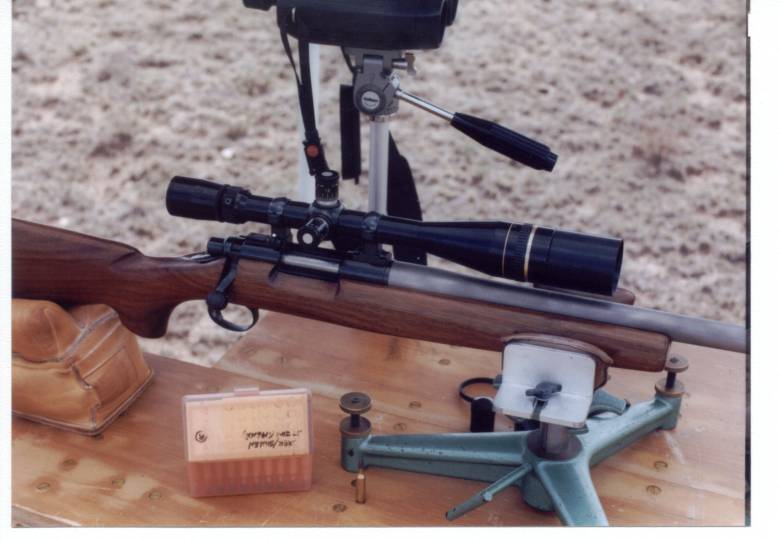 3
3 -
@62vld2042 I feel like I am hijacking this topic, but had to reply. You may have a point but my brother is usually fastidious about maintaining his rifles. At this late date, I am not sure which of his .17 Kimbers this was, probably the Mach IV. Cooling the ammo and keeping it in an ice chest instead of an ammo can sitting in the sun seemed to solve the problem. I don't believe he has had that problem since. He didn't have that much ammo with him anyway because of the difficulty cleaning a .17 in the field with the limited cleaning supplies for it back then. He may have shot 100 rds after figuring out the cooling trick. Of course between the 2 of us we probably went through a couple thousand rounds of .223, 22/250, .243, etc.. on each of our trips. Bob
3 -
Thanks Bob.......
If he was shooting a 20gr in the Mach IV at about 3800-4000fps......depending on barrel condition/quality.........I'd expect problems past about 50 rounds. Moly-plated bullets help.
2000 rounds????........sounds like a great trip for you two.👍
3 -

Lots of factors can cause a change in vertical POI. One that hasn't been mentioned is shooter related. On heavier recoiling rifles, recoil attenuation will cause vertical stringing or change in POI.
I used to shoot a 300 Win mag long range target rifle. Vertical POI could change by several inches depending on how the shooter resisted recoil.
3 -
shooter related . . . I agree, but when the 3 shots that are 2" high are well grouped, I toss that possibility out.
I believe I am at a point of accepting temp effect as my best explanation for now. I'm back East at the moment and will test the environmental effects here today and compare to West conditions as I need to check the zero after the plane's baggage handlers and travel effects to be sure I'm still on some sort of zero.
First hunt of the year this evening!
0 -
The rifle survived the plane flight in the new pelican case.
One round at a target 100 yards away, it was 64 degrees. Landed in the 1" bull.
Hunted last night - nothing.
Hunted this morning - Shot a doe at 90 yards. Dropped in place. Did not even take a step.
I will leave this post alone now as I believe I'm good with my understanding and results.
Thanks everyone!
3 -

I know this is a late post, but when I shoot at 60 - 70 degrees, my cases look fine. When I shoot at 90+ degrees, I see primers flattening. I've read where sniper warm their magazines to get additional velocity out of their cartridges. It this just not an air density problem, but also a cartridge pressure variable?
0 -

Cold air being "denser" so the bullets drop while warmer air lifts the rounds. Is about all I know. Keeping notes would help with the first round connection.
When I start to loosening my Kung Fu Grip on my stack of ammo I plan to keep a note pad to keep a log. Weather, temp, wind direction? But mainly brand and weight of rounds to find out what they like.
0
Post is closed for comments.
Comments
10 comments