Chemists please explain.

I am currently nursemaiding my Bride after she had a total knee replacement two weeks ago tomorrow 16 July.
She has a small lunchbox size cooler with pump, hose, and knee wrap that keeps knee cool/cold. We had been freezing small aluminum bread pans to make an ice cube 4”x4”x6”, and using 3 of those, kind of a pain in the butt, but I had 18 or so in the rotation so thing were ok. A friend who had same surgery suggested using the small 12 oz water bottles, they said they worked great.
I happened to have a case of Nestle water in the garage, so I put the 24 bottles in the freezer. Separated and not in the case.
Much to my surprise after 24 hours most all the bottles were still liquid and only a few showing any signs of freezing at all. After 36 hours most were frozen, but some still had liquid visible.
This is all strange enough, but after they froze the first time, next trip in the freezer, they froze right up in a few hours..as quick as the bread pans did with our well water.
What the heck are they doing to the water?
The freezer is set at -7 degrees.
Mule
-

The water was certainly cold enough.
I remember experiments with the kids about the water being super-cooled and being free of impurities means there's no nucleation points for the ice crystals to form.
I think the premise is to bump or jar the bottle to start the crystallization process.
Probably the water is under a little bit of pressure also.
6 -

So, what proof is that "water"?
15 -

Bottles could have pressure especially when the water starts to freeze and expand.
We use to put pop, soda, not dad,in the freezer. They would stay pretty much liquid until you flipped the lid. Ah ah, instant slushie.
0 -
He Dog: 29738655985947/comments/29738624830619
So, what proof is that "water"?
that’s my confusion also. Having a hard time forming an explanation why so long to freeze first time, then next cycle it freezes normally. All bottles still seals unbroken.
0 -

How hot were they when they were in the garage? Put em in my black trashcan outside for a day, then they would be about 125 degrees.
3 -

From the repository of all knowledge, The Great Wiki…
0 -

Freezing of water is just a transition from a liquid to a solid crystalline state. The stagnant water in a smooth bottle needs a site such as a minor defect in the container for the crystallization to start on. Once the first crystal forms, that provides numerous sites and freezing of the super-cooled water progresses rapidly. A few years ago, my Jeep was left outside on a -10 degree night. A full plastic water bottle was in the cup holder. The next morning, with the temperature still well below zero, I got in the Jeep and immediately noticed the unfrozen water in the bottle. It stayed all liquid until I picked up the bottle whan it immediately froze.
3 -
mike55: 29738655985947/comments/29738672771867
How hot were they when they were in the garage? Put em in my black trashcan outside for a day, then they would be about 125 degrees.
doubt much over 60 degrees if that.
0 -

Couple thoughts…global warming, Biden presidency, magic mushrooms…or maybe the bottles were just hot and overwhelmed the freezer initially?
We could ask @montanajoe if we could borrow his new fridge and test things?
3 -
The guys who mentioned nucleation sites are correct.
It works the opposite way, also. Super pure water in the microwave may not boil until it is disturbed, and then boils furiously. Tap water won't do this because it has more than enough impurities to initiate either freezing or boiling.
3 -

I once left a half bottle of water in my tree stand. The temperature dropped to well below freezing that night. When I got in the stand next morning, still below freezing, the water was still liquid. When I shook it, it immediately froze solid. I never understood it until Rocky's explanation
0 -
Side tidbit: Clouds can't form and rain/snow can't happen unless there are solid particles in the air. Dust, smoke, and salt crystals are the most common nucleation materials, but even pollution can serve. "Pure" rainwater isn't.
0 -
I’ve seen and experienced the above occurrences, but don’t think that’s what happening here.
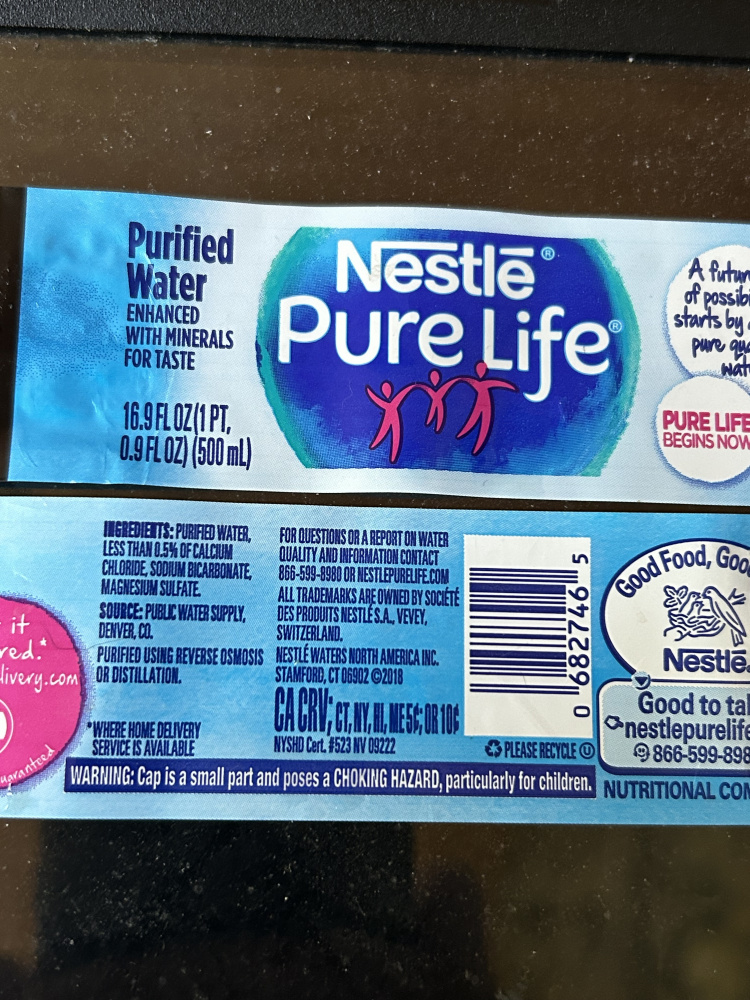
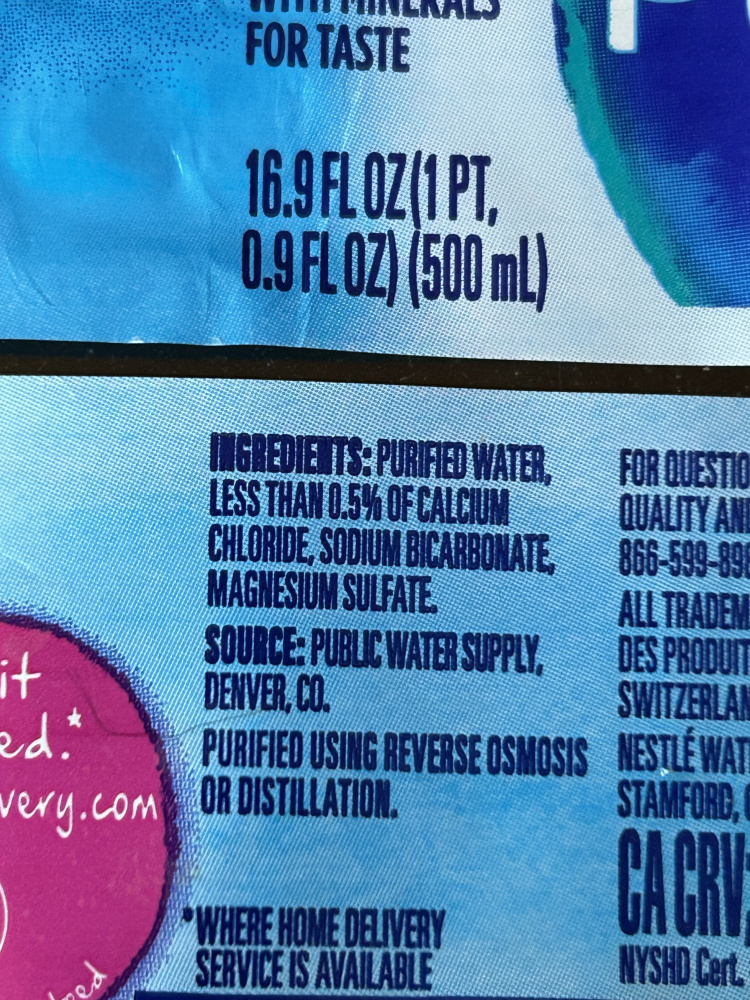
I may have found the answer sooner if I had read the label before this morning.
Not sure about the bi-carb or the magnesium sulfate, but calcium chloride will sure enough inhibit freezing, same thing used for de-icing roadways and sidewalks in the winter or make cement activate quicker.
 0
0 -

Don't forget to check the bottles for splits when thawing out, that plastic is super thin.
0 -
Junkballer: 29738655985947/comments/29738631235739
Don't forget to check the bottles for splits when thawing out, that plastic is super thin.
they’ve all been through multiple thaw/freeze cycles with no splits so far, must be just enough air gap for the expansion without stressing the bottle.
0 -
I'm not sure that chemicals in solution can be nucleation sites because they ionize down to a molecular level. I'm not chemist enough to say. Water molecules have to "latch onto" something to start forming an ice lattice. Once they do, it's a chain reaction, though.
3 -

Happens on our roads here in the winter, with chain reaction also
3 -

The first time you froze them, the case extended out to a point that kept the freezer door cracked open.
It is always the simple things.
3 -
Don McManus: 29738655985947/comments/29738625944987
The first time you froze them, the case extended out to a point that kept the freezer door cracked open.
It is always the simple things.
maybe I’ll try plugging the freezer in also, I thought you just put things in and they froze, thought the electricity was only for the light.
9 -

dpmule: 29738655985947/comments/29738626009115
https://forums.gunbroker.com/discussion/comment/11445437#Comment_11445437
maybe I’ll try plugging the freezer in also, I thought you just put things in and they froze, thought the electricity was only for the light.
Put them in your microwave and plug it in backward. They'll freeze in 60 seconds.
6
Please sign in to leave a comment.
Comments
20 comments